
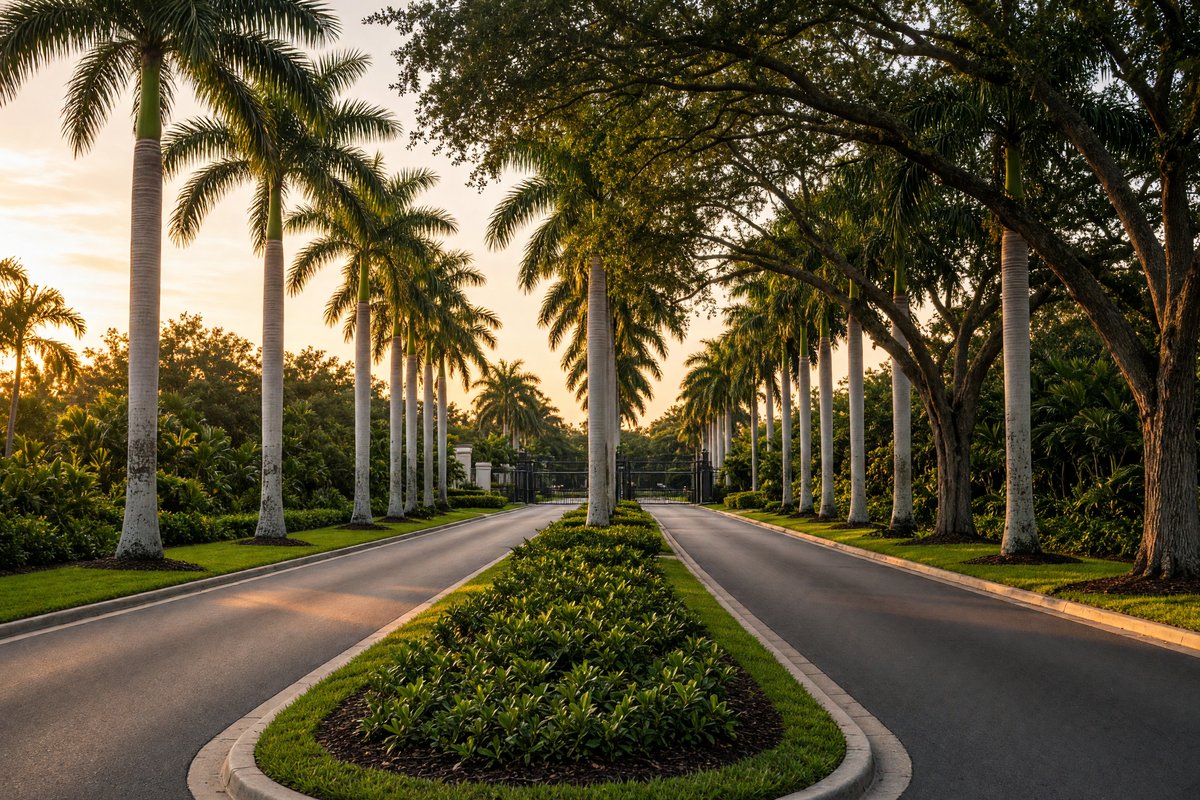
HOA tree service in Davie is easiest to manage when the board treats trees like any other capital item: a calendar, a budget line, and a written standard instead of a scramble after the first named storm.
Share the calendar in the newsletter so owners know why a lift is at the clubhouse in March and not in August. The board is buying fewer emergency invoices, not a promise that no limb will ever fail. South Florida wood still moves in squalls. What the calendar does is keep the easy work off the storm week and keep the entrance looking like someone planned it.
If the association uses a landscape company for hedges and turf, write down where their work stops and where the tree crew starts. Palms and oaks are not the same invoice as a hedge trim. Split that in the contract so two vendors are not billing the same royal palm.
Keep a one-page species list with photos in the manager’s cloud folder. New board members should be able to tell a sabal from a royal and a live oak from a black olive before they vote on a bid. That folder is cheaper than a wrong spec.
HOA boards and property managers: call KAP Tree Service at (754) 291-6477 for a free estimate.
Why a yearly tree calendar belongs in the board packet
Davie and the rest of western Broward run hot and wet. Live oak, black olive and mahogany put on growth in the rainy months. Royal, sabal and coconut palms drop boots and fruit on a different clock. If the association waits until a resident complains about a limb over the sidewalk, the work lands in hurricane season, when every crew in the county is already booked and the canopy is at its heaviest.
A simple calendar lets the manager bid the work in the quiet months, tell residents when trucks will be on the common areas, and keep entrance palms looking full instead of stripped. Pair it with the same kind of thinking we use on hurricane-season tree prep: inspect first, then trim, then leave the living green in place.
January through March: inspect, bid and clear the dry-season list
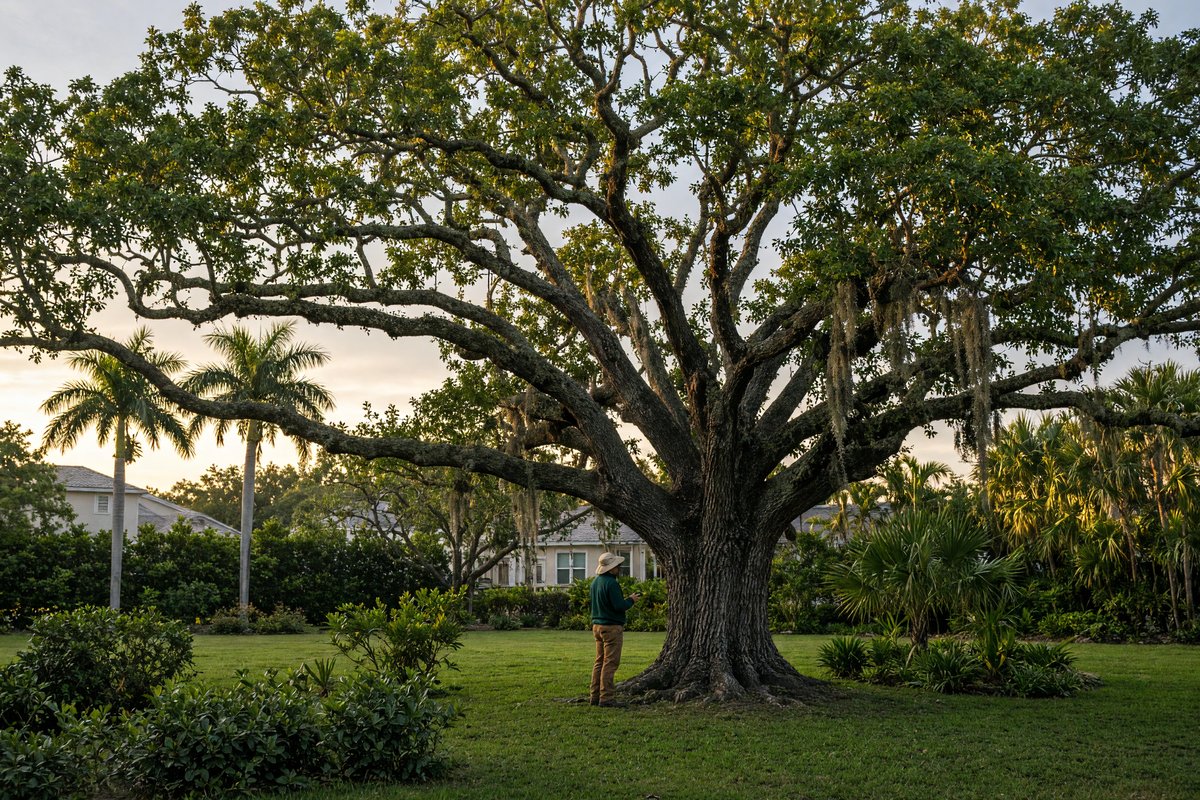
This is the best window for a walk of the common areas. Leaves are thinner on some hardwoods, so structure shows. Walk every entrance, the clubhouse lawn, the pool fence, lake banks and the sidewalks residents use at night. Note deadwood, co-dominant oaks, palms with hanging boots, and limbs on streetlights. Count trees by species so the bid is a list, not a vibe.
Send that list out for quotes while crews still have calendar space. Ask for a written scope: tree count, species, the pruning standard (thinning and reduction, not topping), debris haul-off, and whether stump grinding is in or out. Communities next door in Weston often add HOA architectural rules on top of the town’s; Davie boards should do the same in the packet so nobody is surprised on work day.
Dry-season work that belongs here: structural pruning on young live oaks, deadwood on mahoganies, and any removal the board already approved. Confirm Davie tree-removal questions on davie-fl.gov before a common-area tree comes down.
April through June: palms, fruit and the start of storm season
South Florida’s hurricane season is on the calendar whether the board is ready or not. April and May are when coconut palms should be de-nutted if they hang over walks, parking and the clubhouse door. Royal and sabal palms get dead fronds and spent stalks, with the green head left intact so the palm still feeds itself.
Black olive fruit stains pavers at the mail kiosk. That is a maintenance conversation, not always a removal. If the board wants the tree gone, put it on the bid with a replacement species that fits the entrance. Live oaks get a thinning pass if the crown turned into a sail last year. Do this before the afternoon storms of June make the wood heavy and the ground soft.
Budget in this quarter for storm debris as a separate line. A named storm is not the same invoice as the spring trim. Residents need to hear that in the newsletter so the special assessment talk, if it comes, is not a surprise.
July through September: hold the standard, watch the weather
This is not the month to reinvent the canopy. Keep the emergency list current: trees that cracked, palms that lost a spear, oaks that leaned after a squall. Routine thinning can wait if a storm is in the Gulf. What still belongs on the calendar is a mid-season walk of playgrounds, pool decks and school-bus stops. Low limbs grow fast in the rain.
If the association plants in the rainy season, water is easier, but young trees still need mulch pulled back from the flare and a clear stake plan. Do not let the landscape vendor hedge a live oak into a ball. That tree is a 40-year asset.
October through December: appearance, lights and next year’s bid
October in Davie is still green. Entrances should look full: lifted canopies, clean palms, deadwood off the clubhouse lawn before fall events. Streetlights that disappeared into mahogany should be opened back up before the early dark. That work is the same standard as the rest of the year, timed so residents notice it on the way to the clubhouse.
November and December are for closing invoices, photographing completed work, and putting next year’s tree line in the draft budget. If the board wants a multi-year rotation — oaks one year, palms the next, lake bank the third — write it down. Crews price a known rotation more cleanly than a panic call in August.
Keep copies of insurance certificates with the contract. When the new board sits in January, the calendar should already exist so they are not starting from a blank page.
Share the calendar in the newsletter so owners know why a lift is at the clubhouse in March and not in August. The board is buying fewer emergency invoices, not a promise that no limb will ever fail. South Florida wood still moves in squalls. What the calendar does is keep the easy work off the storm week and keep the entrance looking like someone planned it.
If the association uses a landscape company for hedges and turf, write down where their work stops and where the tree crew starts. Palms and oaks are not the same invoice as a hedge trim. Split that in the contract so two vendors are not billing the same royal palm.
Keep a one-page species list with photos in the manager’s cloud folder. New board members should be able to tell a sabal from a royal and a live oak from a black olive before they vote on a bid. That folder is cheaper than a wrong spec.
HOA boards and property managers: call KAP Tree Service at (754) 291-6477 for a free estimate.
