
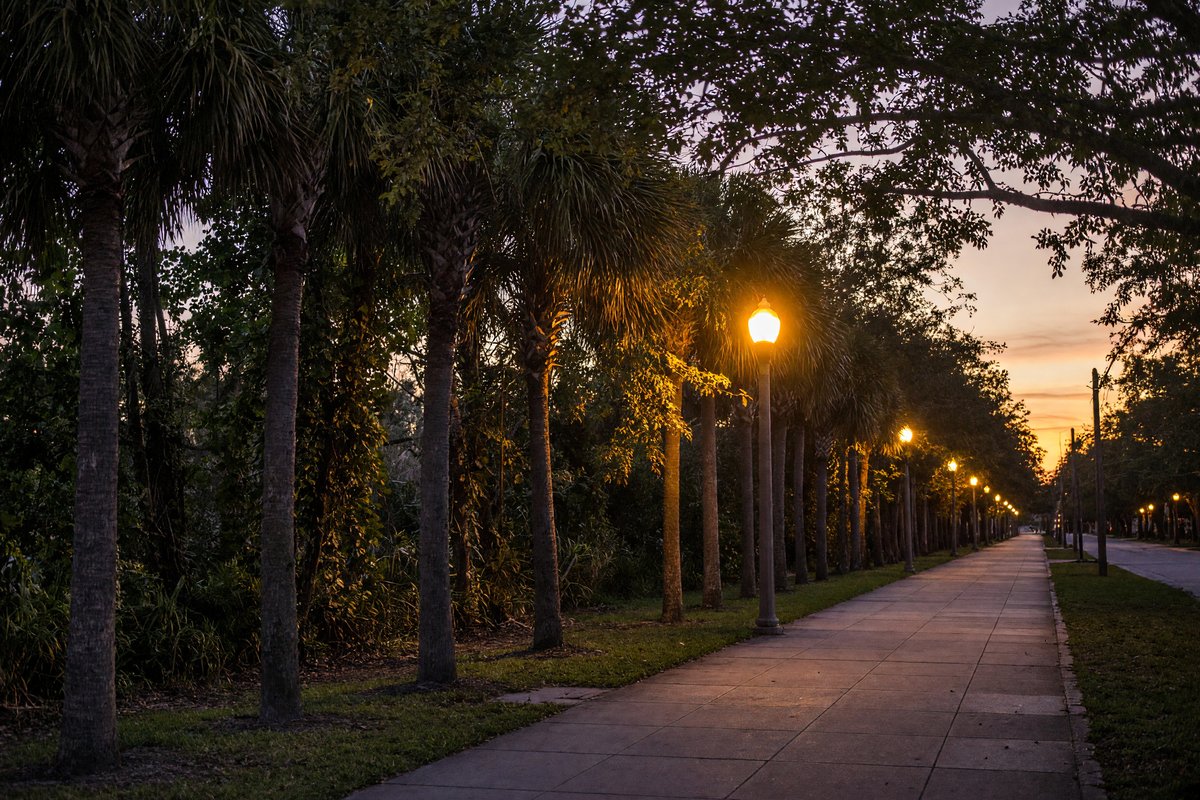
Low limbs over the sidewalk are a board problem the week before Halloween, when strollers, costumes and dusk all show up at once. Davie tree trimming service for common-area streets is about clear walking room, open corners and light that actually hits the pavement.
Measure clearance the way a tall adult with a wagon would: about seven to eight feet over the walk is a practical target on common-area oaks, higher over the street if the association owns those trees. Palms are different — you are taking fruit and dead fronds, not lifting a hardwood scaffold. Write the target in the scope so two bidders are aiming at the same sidewalk.
After the lift, walk the route again at night. If a light is still a green blob, mark that tree for a second pass. One visit should be enough on most streets if the list was honest. Repeat trips happen when the bid said “street trees” and nobody counted the mahoganies behind the guest parking.
Keep a short resident FAQ ready: the association is lifting common-area trees for Halloween foot traffic; private lots are the owner’s contract; debris should be gone the same day. That FAQ cuts the Facebook thread in half.
HOA boards and property managers: call KAP Tree Service at (754) 291-6477 for a free estimate.
What “clear” means on a community sidewalk
Adults in the dark, kids looking at houses, and wagons on the edge of the walk all need the same thing: a path they can see. Live oak laterals that hang at six feet feel fine at noon and catch a hat at 7 p.m. Black olive drips fruit onto the same concrete. Mahogany puts out long, end-heavy wood after a wet summer. Lift those limbs on the common-area trees the association owns. If the limb is on a private lot hanging into the walk, the manager still has a conversation with the owner; the sidewalk still has to stay walkable.
A simple field measure: walk the route at dusk with the lights on. Mark every place a branch crosses the light or a person would duck. That list is the bid. It is more useful than “trim the street trees.”
Corners, stop signs and the school-bus pull-off
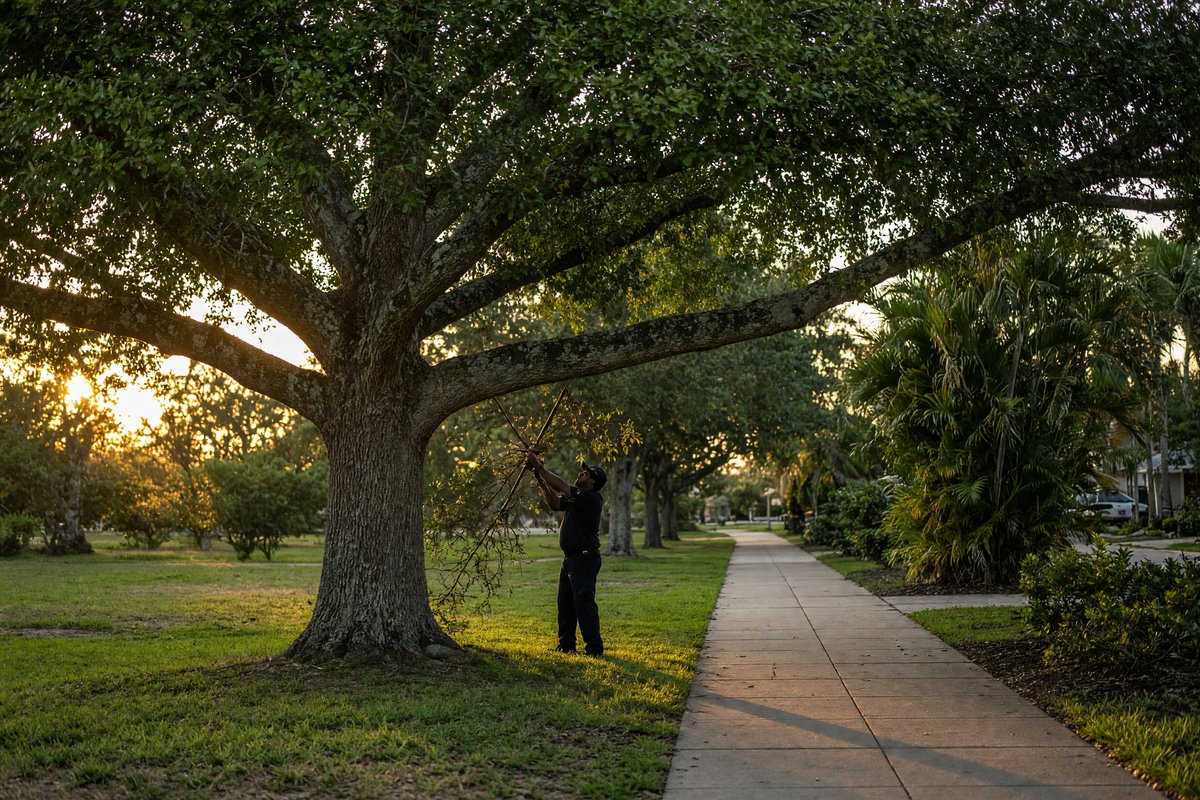
Sight lines at internal stops matter more in October because more people are on foot after work. A sabal or a hedge that swallowed a stop sign is a safety item, not a landscape preference. Cut for the sign and the corner first, then for looks. Communities that sit against busier roads, the way some streets do toward Cooper City, pick up extra traffic at dusk; the same rule applies inside the gates.
Do not flatten the tree to “open the corner.” Reduction of the limbs in the sight triangle is enough on a healthy oak. A topped tree at the entrance is a different problem next year.
Streetlights that disappeared into the canopy
If the fixture is on, and the sidewalk is still dark, the tree won. Open a window through the crown so the lamp reaches the walk. That is selective thinning, the same idea as tree trimming benefits on a residential lot, applied to the HOA’s light plan. Leave interior foliage. The goal is a pool of light on concrete, not a tree with no leaves.
Coconut palms next to a light need fruit off so nuts are not the thing that hits the globe. Royal palms need boots that will not slide onto the walk. Green fronds stay.
Who owns the tree, and what Davie may ask
Swale trees, easement trees and HOA common-area trees are not always the same owner. The manager should know which list a tree is on before the saws start. If a removal is on the table, not just a lift, check the Town of Davie’s current tree rules on davie-fl.gov and stay with the application they publish. This page is not a substitute for that form. Broward County’s site at broward.org is the county-level starting point when the question is bigger than one town.
Private-lot trees that hang into the walk still need a notice to the owner. The association’s documents usually say who can force a trim. Put that in the manager’s notes so the crew is not arguing at the curb.
Schedule so the street is open on the 31st
Do the lifts mid-week, haul the same day, and keep one lane open. Tell residents which streets and which hours. If a storm is in the forecast, take the hanging wood first and leave the cosmetic lift for the rain date. Chips in the gutter the night of trick-or-treat are how the board hears about it in November.
Photograph before and after at dusk, not at noon. The board is buying night safety. The photos should show the light on the walk.
Measure clearance the way a tall adult with a wagon would: about seven to eight feet over the walk is a practical target on common-area oaks, higher over the street if the association owns those trees. Palms are different — you are taking fruit and dead fronds, not lifting a hardwood scaffold. Write the target in the scope so two bidders are aiming at the same sidewalk.
After the lift, walk the route again at night. If a light is still a green blob, mark that tree for a second pass. One visit should be enough on most streets if the list was honest. Repeat trips happen when the bid said “street trees” and nobody counted the mahoganies behind the guest parking.
Keep a short resident FAQ ready: the association is lifting common-area trees for Halloween foot traffic; private lots are the owner’s contract; debris should be gone the same day. That FAQ cuts the Facebook thread in half.
HOA boards and property managers: call KAP Tree Service at (754) 291-6477 for a free estimate.
