
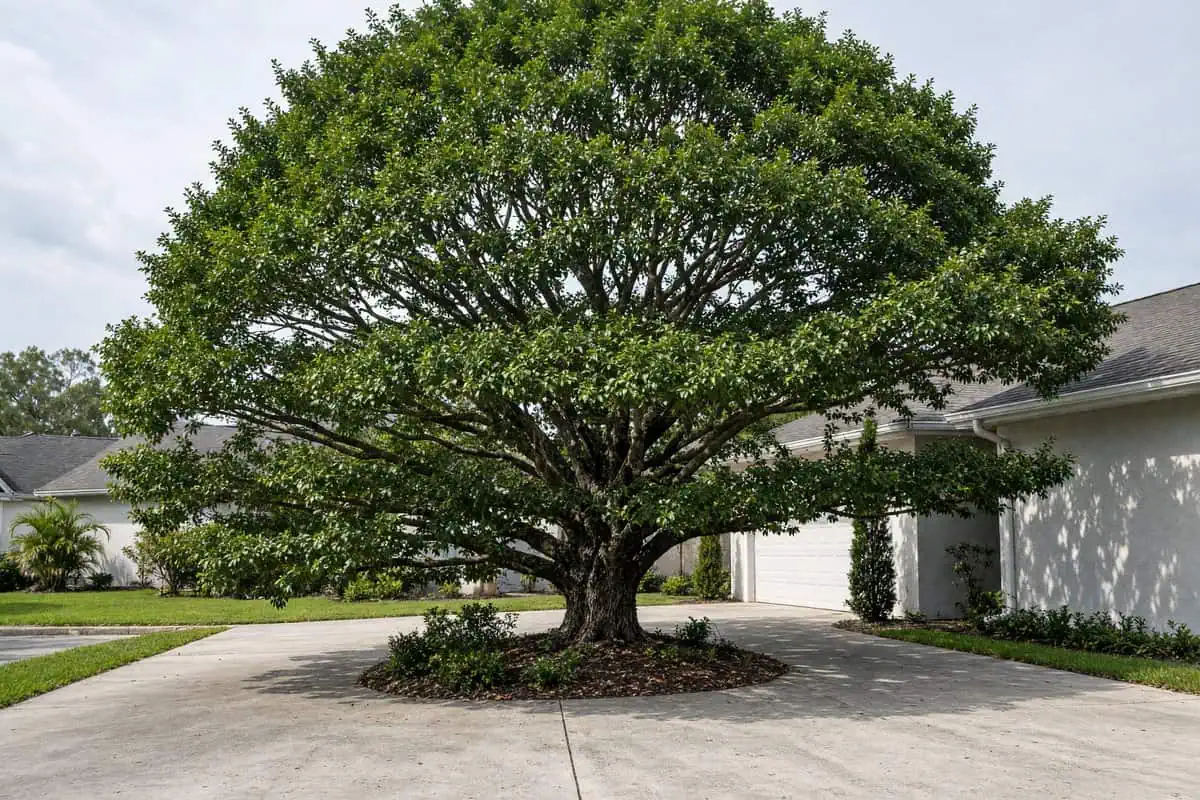
Black olive is one of the common shade trees on older Broward lots, and it earns mixed feelings: fast shade, messy fruit, surface roots, and a habit of dropping limbs in storms. KAP Tree Service handles tree care in Davie on these trees every season, from thinning to taking them down when the roots have won.
Call (754) 291-6477 for a free estimate
What a black olive does in a South Florida yard
Black olive (Bucida buceras, often sold as “Shady Lady” when it is the compact cultivar) puts on a dense, dark canopy. That is why it was planted along streets and in front yards from Pembroke Pines through Davie. The fruit stains driveways and pool decks. The leaves are small and they drop year-round, not in one neat autumn. Surface roots lift walks and compete with St. Augustine.
None of that automatically means the tree has to come out. It means you should not plant a new one three feet from a pool cage and then act surprised. On an established lot, the question is whether the tree is still a net good or whether it is failing.
Problems we actually see
Limb drop: black olive wood can be brittle. Long, end-heavy limbs over a roof or a parking pad are the ones we shorten or take off. That is reduction and deadwood, not a hurricane cut.
Roots: they run shallow. If they are already in the slab or the sewer, grinding a surface root is a delay, not a fix. If the tree is otherwise healthy and the walk can be repaired, keep the tree and stop planting over the root zone. If the tree is hollow, leaning, or the HOA is done with the fruit, removal is the cleaner path.
Storms: a dense, unthinned crown acts like a sail. Thinning lets wind through. Topping does not. We have said that on every city page for a reason. In Pembroke Pines the same species shows up on HOA streets with the same fruit complaints.
When to remove it
Take it seriously if there is a new lean after rain, a hollow trunk, large dead leaders, or roots that have already broken a pool deck. Fruit and leaves are a maintenance problem. They are not, by themselves, a removal. If you want the tree gone because of stain and litter, say that. We can still take it down; we will not pretend it was a hazard if it was not.
Davie may want a permit. Match the species on the application. Do not call it a live oak to make the paperwork easier.
If you are keeping it
Thin the crown on a cycle, keep deadwood out, and stop piling soil and pavers on the root flare. Do not “root prune” with a trencher along the foundation unless someone who understands trees has looked at how much of the root plate you are about to cut. For the broader “should this tree come out” list, use tree care basics and the removal-signs post.
Replacement: if it comes out, pick something that fits the space. A second black olive in the same hole repeats the story. Gumbo limbo, a properly placed live oak, or a palm are the usual conversations, and the Town may have a replacement list if the permit required one.
Fruit, stain and HOA letters
Black olive fruit is small and it stains light pavers. Pressure washing is a homeowner job, not a tree-service add-on we pretend to include. If the association is citing you for “debris,” thinning helps a little and removal ends it. We will not write your HOA letter, but we will give you a written description of the work if they want one before we cut.
Do not fertilize a black olive to “make it happier” if the complaint is fruit. Happier trees make more fruit. Do not spike the root zone against the walk. You will get more surface roots, not fewer.
If you plant a Shady Lady thinking it stays small forever, it still wants width. Read the mature spread, not the 15-gallon tag. The compact form is better than the seedling in a small yard, not magic.
If you keep the tree, schedule thinning before hurricane season, not during the week a storm is in the Gulf. Crews are shorter then and the work is slower. Deadwood and end-weight come off first. Fruit drop will not stop; it will just fall from a slightly smaller crown.
When we remove a black olive, plan the stump the same day if you can. Suckering is less of a black-olive story than ficus, but the hole still needs soil and sod or a real replacement, not a volunteer pepper.
If you want us on the property, have the gate code, the HOA rule if there is one, and a clear photo of the whole tree or hedge from the side that faces the house. That is enough to start. We will tell you if we need to walk it before we price. No dollar figures on this page, no 24-hour promise we cannot keep, and no topping.
Davie is the yard we work from. Nearby cities are on the same trucks, not a different company. If the job is on the other side of the county line, say the city when you call so we bring the right permit conversation, not the Davie one.
Call KAP Tree Service at (754) 291-6477 for a free estimate
